
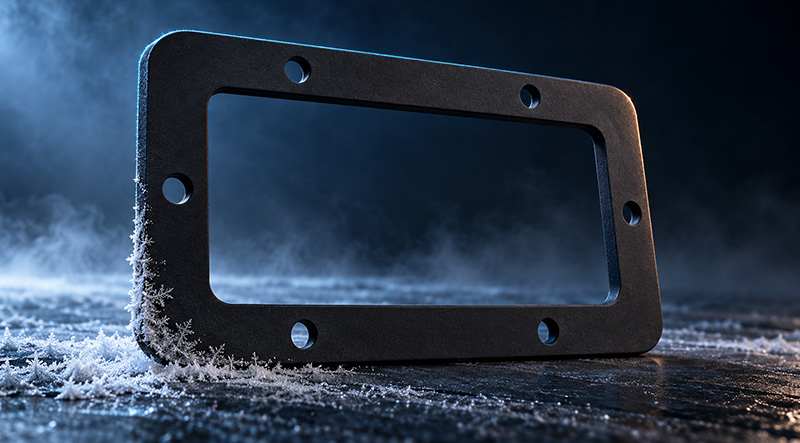
Rubber gaskets used in cold environments need to maintain an effective seal through start-up, normal operation and shutdown. A published temperature range provides a useful starting point, but the material must also suit the joint, the substance being sealed and the way the equipment operates.
At Dobson Gaskets, we support material selection and bespoke manufacture, bringing these requirements together to help identify a suitable grade, profile and thickness. Understanding the application allows us to look beyond a headline temperature rating and consider what the gasket needs to do in service.
How cold conditions affect rubber gaskets
As temperatures fall, rubber generally becomes stiffer and less resilient. This can reduce its ability to recover after compression or respond to changes in the joint. Thermal contraction can also affect sealing contact, depending on the material and assembly.
A gasket does not need to show visible cracking to develop a sealing problem. It may remain physically intact while becoming less able to accommodate movement or maintain contact as operating conditions change. For equipment exposed to low temperatures, this makes flexibility and recovery important considerations alongside chemical compatibility and pressure. Dobson considers these requirements together when supporting material selection.
Why the temperature rating needs context
The minimum temperature shown on a material datasheet reflects particular test methods or assessment criteria. Different tests examine different aspects of behaviour, including brittleness, stiffness and elastic recovery. These results provide valuable evidence, but a material’s response in a laboratory test does not establish how every gasket made from it will perform. The finished seal also depends on its geometry, compression and operating environment.
A compound that remains flexible at the required temperature still needs to resist the process medium and work within the joint’s available loading conditions. Similarly, strong chemical resistance alone does not establish suitability for cold service. Our role is to help interpret these requirements and assess the material in the context of the application.
Looking at the complete operating cycle
Normal running temperature may tell only part of the story. Outdoor equipment can remain idle through freezing conditions before restarting, while process equipment may repeatedly move between cold and warm operation. These changes can affect both the gasket and the surrounding assembly. Expansion, contraction and pressure fluctuations can alter the conditions under which the gasket must maintain contact.
When discussing a low-temperature application, useful questions include when the equipment becomes cold, how long it remains at that temperature and whether leakage occurs during start-up, operation or shutdown. For example, a joint that seals once the equipment warms up may need closer assessment of its cold-start conditions. Repeatedly fitting the same replacement gasket could leave the underlying material or joint issue unresolved. By understanding the operating cycle, we can help assess whether the existing specification remains appropriate.
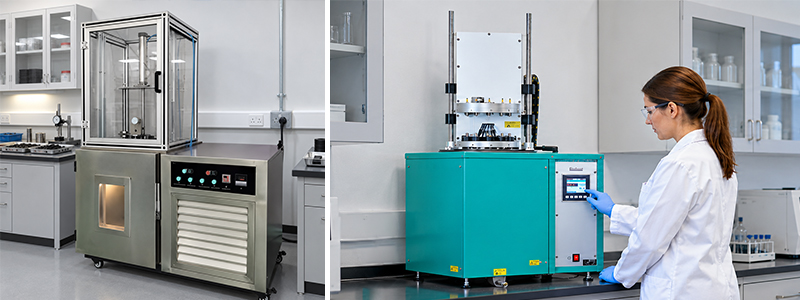
Low-temperature compression (left) and Gehman stiffening tests (right) provide important material data, but gasket specification must also account for application parameters and operating cycles.
Selecting a suitable rubber grade
Descriptions such as EPDM, nitrile and silicone identify broad material families. Each includes grades with different combinations of flexibility, hardness, recovery and resistance to fluids. This means that two materials carrying the same polymer description may perform differently in cold conditions. The formulation matters, as does exposure to the substance being sealed. Contact with a process fluid can change the material’s properties and influence its behaviour over time.
Selection therefore requires a balance. A grade with useful cold flexibility must also be compatible with the application’s oils, fuels, water, chemicals or cleaning agents, as applicable. Maximum operating temperature and any relevant industry requirements also need consideration. Dobson supports this assessment, helping customers identify a suitable material from the application information available. Customers can begin with their equipment requirements and existing gasket details; the technical discussion can then establish where further information is needed.
Matching the material to the finished gasket
Material selection and gasket manufacture need to work together. The profile must suit the sealing faces and bolt arrangement, while thickness must be considered alongside joint geometry and available compression. Increasing thickness does not automatically improve sealing. A replacement needs to work within the assembly’s design requirements, particularly where operating temperatures change.
We manufacture bespoke rubber and silicone gaskets using a range of commercial and specification-grade sheet materials. Bringing material selection and manufacture together helps match the finished component to the joint and its operating demands. For replacement work, drawings, dimensions and details of the existing gasket provide a useful starting point. Information about previous performance can also help distinguish a straightforward replacement requirement from an application that needs further review.
Discussing a low-temperature gasket requirement
You do not need to arrive with a fully specified rubber compound. The most useful starting information is what the gasket seals, the temperatures it experiences and how the equipment operates.
Where available, provide:
- Minimum, normal and maximum operating temperatures.
- Details of the process medium and cleaning chemicals.
- Operating pressure or vacuum.
- Drawings, dimensions or the existing gasket specification.
- Any history of leakage, including when it occurs.
Our team can use this information to support material selection and bespoke manufacture, helping match the grade, profile and thickness to the application.
SPECIFYING RUBBER GASKET MATERIALS
Talk to Our Experienced Technical Team
Dobson Gaskets supports material selection alongside bespoke gasket manufacture. Details of the equipment, operating conditions and existing gasket help establish a suitable specification. Speak to our team about rubber gaskets for equipment operating in cold conditions.