
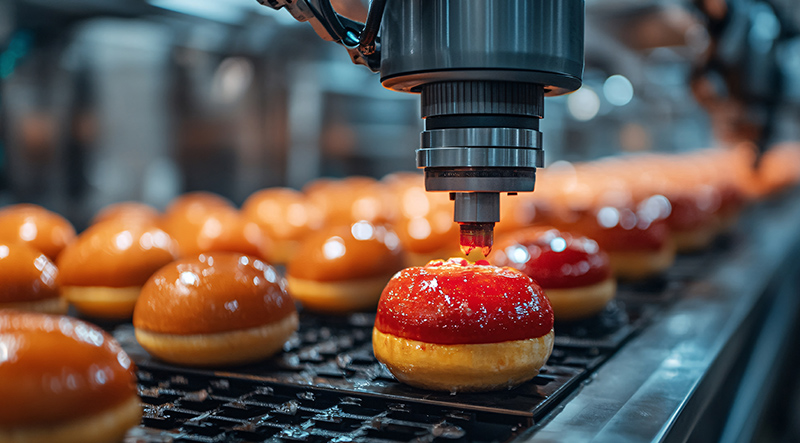
The term “food-grade” alone does not confirm that a gasket is suitable for a particular food or beverage process. The material must suit the product it contacts, the operating temperature and the duration of exposure, with documentation supporting its intended use.
Dobson Gaskets helps customers bring these requirements together through material selection, bespoke manufacture and documented quality controls. This connects food-contact suitability with the specification and traceability of the finished gasket.
Food-contact suitability and sealing performance both matter
Food-contact materials must protect consumer health and food quality. Under Regulation (EC) No 1935/2004, they must not transfer constituents into food in harmful quantities or cause unacceptable changes to its composition, taste or smell.
Suitability depends on the intended use. Chilled water, hot fatty foods and acidic products present different requirements. Food type, contact temperature, duration and repeated use all need consideration, so “food grade” alone cannot establish suitability for every process. The gasket must also seal reliably under the equipment’s pressure, compression and temperature conditions. Cleaning can introduce higher temperatures and different chemicals than those encountered during production.
At Dobson, material selection, supporting documentation and manufacturing controls form part of the same process, helping us deliver gaskets suited to the application and its agreed requirements.
What should the documentation establish?
Useful documentation identifies the material and explains the basis of the food-contact claim. It should allow the relevant parties to understand what has been assessed and any restrictions on use. Depending on the material and applicable requirements, this can include:
- The material manufacturer and exact grade.
- The legislation or technical guidance used as the assessment basis.
- Intended food types, contact temperatures and durations.
- Relevant limitations or restrictions.
- Supporting test or assessment references.
- Product identification that connects the evidence to the material supplied.
A technical datasheet, material certificate and Declaration of Compliance serve different purposes. Physical-property data alone does not establish food-contact compliance, while a broad statement about a polymer family may not identify the particular formulation being supplied.
For plastics covered by Regulation (EU) No 10/2011, suppliers must provide a written Declaration of Compliance when supplying materials or components to other businesses, including manufacturers and food processors. This requirement applies throughout the commercial supply chain, except at the point of retail sale to the final consumer. The appropriate documentation route for rubber requires separate consideration.
Why plastics and rubber follow different regulatory routes
Food-contact materials share general safety obligations, but the detailed rules differ between material categories. Within the EU, plastics falling under Regulation (EU) No 10/2011 are subject to specific requirements covering composition, migration assessment and declarations.
Rubber does not have an equivalent comprehensive, harmonised EU food-contact measure. Instead, the general framework applies together with relevant national provisions and recognised guidance. The European Food Safety Authority (EFSA) identifies rubber among the non-plastic materials for which this combination of requirements may apply.
This means the basis for demonstrating suitability must be established for the material, application and destination market. A declaration referring to the plastics regulation should not automatically be assumed appropriate for a rubber gasket. The distinction is explored in the European Sealing Association’s December 2025 article on food-contact regulations, which highlights the differing national approaches affecting rubber materials
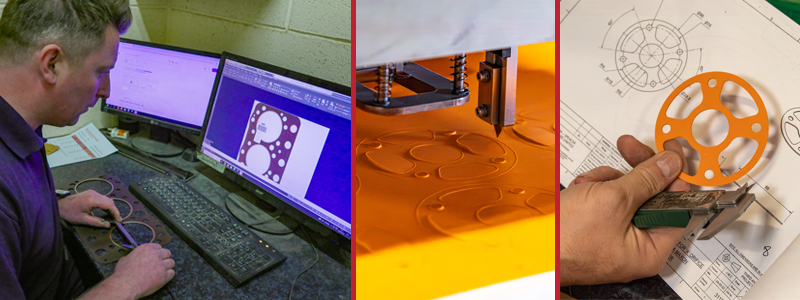
From design to manufacture and repeat ordering, our PPAP processes ensure consistency with every gasket.
How PPAP expertise supports consistent manufacture
Selecting an appropriate material is one stage. Manufacturing the agreed component consistently is another. For a manufactured gasket, a useful record trail can connect the approved material grade and supplier batch to the manufacturing order, drawing revision, inspection results and dispatch identification.
This matters during repeat ordering as well as investigations. A replacement that looks identical may not have the same material formulation or supporting evidence. Maintaining the agreed specification helps avoid substitutions based solely on appearance, dimensions or a generic description.
Dobson’s Production Part Approval Process (PPAP) includes raw-material certifications, batch traceability records and controlled design documentation. These provide a basis for connecting material identity with manufacturing records. Applied to a food-contact gasket requirement, these disciplines help maintain the approved material, thickness and profile while supporting the review of proposed changes. PPAP does not itself confer food-contact approval or replace the necessary compliance evidence. Its role is to support repeatable manufacture to the agreed specification.
Bringing evidence and manufacturing together
A food-contact gasket needs a clear connection between its intended use, material evidence and manufacturing specification. Clients can begin with practical information: the product being handled, operating and cleaning conditions, equipment details and any documentation requirements. Dobson can then support the technical assessment and identify where further information is needed.
By combining material knowledge with bespoke manufacture and documented quality controls, Dobson Gaskets helps customers move from “food grade” to a defined, traceable gasket specification.
SPECIFYING FOOD-CONTACT GASKETS?
Talk to Our Experienced Technical Team
Discuss your food-contact application with Dobson Gaskets for support with material selection, bespoke manufacture and agreed documentation requirements.